
Blog
Living with empathy in the 21st Century
 This month our practitioners have been discussing how we cope with our fears about what is happening in the world. How do we keep ourselves healthy, both mentally and physically, to be able to keep putting ourselves out there? And what can we recommend to people who are struggling to balance their empathy for others with the need to get on and survive their own challenges.
Herbalist Sara Furness on the differences between sympathy, empathy and compassion
• Sympathy means well but comes from the witness’s distanced perspective, it might sound something like “I’m sorry, but at least.” We try to make things better and steer away from the distress, often to protect ourselves from feeling.
• When we empathise, we take steps into the heart realm and the emotions, we connect in some way to the other person, walking in their shoes, being as present as we can with their experiences, trying to understand the situation as they experience it, which might then lead to our own feelings and experiences surfacing.
But here, our boundaries might begin to blur…we might get lost in the other person’s experience and confuse their suffering with our own, or forget to care for our own feelings and needs.
• Then I think compassion comes in, which is like the advice to apply your own oxygen mask before trying to help others with theirs…
Sometimes we can plan this, so before an encounter with someone going through a difficult time, we could check in with ourselves and notice our own state of being and what we need to be present to ourselves so we can be present with someone else…
Unfortunately, we often confuse this with being weak or indulgent and think that we don’t really need it. It is a bit like warming up and cooling down with physical exercise. So, just as with our physical bodies, it’s helpful to maintain strength/ resilience and flexibility/ stability in our emotional body too…
Healer Jo Brierley benefits from engagement with important social issues.
I’ve found it important to find ways to engage actively in important social issues that are close to my heart. Especially when I’m feeling despair at what I hear is happening in pretty much every aspect of life in the UK and all over our world.
In my experience taking that step (even if, or maybe because, it’s challenging and feels too much) has brought Hope into my life.
I have met so many excellent good hearted people doing their bit, for their area of passion or care. It feels important to me to step out of our comfort zone into that area of growth, taking care to steer clear of our terror zone.
I agree with the oft misquoted John Stuart Mill, who said in 1867 “Bad men need nothing more to compass their ends, than that good men should look on and do nothing.”
The antidote to apathy is the hope that comes from appropriate (for you) action.
I’m also finding the practice of Grief Tending a valuable part of being able to stay present (at least some of the time) with world issues.
A place to start is Francis Weller’s book The wild edge of Sorrow. I find our culture is repressive around expressions of strong emotions in public or even at home.
This practice draws together all types of grief and creates safe places to begin to tap into them and when ready, to express them. I have been going to short (3hrs), full day & 3 day long grief retreats over the past 3 years and they’ve really helped me stay in my heart.

Herbalist Joy Holmes on the problems of being constantly connected to media and news.
Having world affairs in our faces is a relatively new thing. Before the advent of smart phones we would get the news from papers, TV and radio. Many of us of a certain age can recall this and so it’s always good to remind each other that we do need down time from world events. Our younger population don’t consume media in the same way. Many don’t have live TV and stream their music. So they have what’s going on streaming through their phones constantly with social media.
I find having time away from my phone to be beneficial to my mental health. I like Jo’s idea of doing something that involves actively supporting what you believe in, this can make you feel less helpless. We can feel the support of those joining in and take comfort that we aren’t alone. But, it’s equally ok to remind each other that we cannot carry the weight of the world on our shoulders. I always suggest that we try to look for the good that is being done to balance the terrible.
I have always found getting into nature to be healing so that I can give people my time. Listening to bird song is one of the most healing things to do. It’s something anyone with a phone can do if they aren’t near wildlife but simply opening a window early morning can be so gently uplifting and we carry this out into the world. Smiling at a stranger, holding a door for someone, these little things can have a ripple effect. Being kind is an act of rebellion – I’m not sure who said it but I like it.
Sports massage therapist Kate Sheridan on connection to media and news:
Whilst it is important to be aware of events, I think we all know we should limit the time we spend reading about them each day. It’s helpful to recognise the emotions that the state of things and people’s challenges evoke in us, and then look at what we are already doing or can do to create the kind of world we want to live in; this action calms the brain, especially if we join in with a community. Often people feel helpless so taking some action, however seemingly small, gives a sense of agency and positivity.
However, the first aid principle also applies: we help others best when we ourselves are well and safe. People may feel this is selfish but it’s keeping your personal foundations secure so that you have a sound base to act from. Structure to how we use our time and boundaries over how long we spend on each thing, including worries and news, help with this. We can feel for what others are going through, experience empathy, but it’s ok to then step back and do something for ourselves as well as looking at what we can do for others. It’s important to rest and restore ourselves and not burn out. It can be challenging to switch; practical activity often helps due to its effect on the brain.
I also like to consciously acknowledge each day things that make the world a good place, from small kindnesses that I notice to birdsong and the light on trees. Taking a moment to ground myself in noticing what my senses are taking in prepares me for what I am about to engage with, and helps me regroup after a stressful event.
I also find exercise of any kind – I love walking – is invaluable for restoring a sense of balance and helping with organising thoughts and processing emotions.
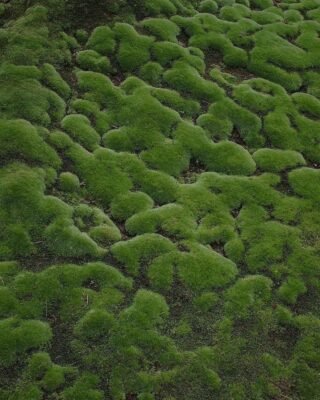 Herbalist Sue Pitt with some grounded activities in nature
I always think that we can learn so much from looking at nature. When I was younger the interactions between living things were always talked about as simply a matter of competition – the strongest male will get the mate, the tallest plant will reach the light and so on. These days we are learning more and more about connections and collaborations that make the whole ecosystem more successful. There are so many examples of this: a bird willeat the fruit from a tree and then spread its seed, the mycorrhizal fungi in the forest floor exchange nutrients with trees and pass signals between them, woodland plants often flower in the spring while the trees are bare, but enjoy the cool and shade provided by the canopy during the summer months. We now recognise that the healthiest ecosystems are the ones that are most diverse. We know this instinctively ourselves. Compare the experience of walking through a pine plantation where the trees are all the same and the forest floor looks dark and empty, to that of an ancient woodland where thousands of different plants and animals have found their little corner in which to thrive.
So how do we apply this to our own lives? There are so many pressures that make us feel like we need to behave like the pine tree in the plantation – just keep going straight up, stay separate from your neighbour and you will reach the sunlight one day. But I would urge you to go into a more diverse wood and take a good look at the way the many different plants are living together. Which one do you relate to most? The tiny moss that sits quietly on a stone, the honeysuckle that needs a sturdy trunk to climb, or maybe the bluebell? One bluebell on its own is nothing special, but a mass of them together for that brief moment in spring is quite magical.
I am not trying to be flippant about the seriousness of things that are happening in the world today, or about the impact they are having on people’s lives. But I do think that we can only start from our own place and do what we can do in our own way. If you can find a small corner of the world to be yourself and to thrive then you will be making your contribution. Give thanks for the connections and collaborations that make it
